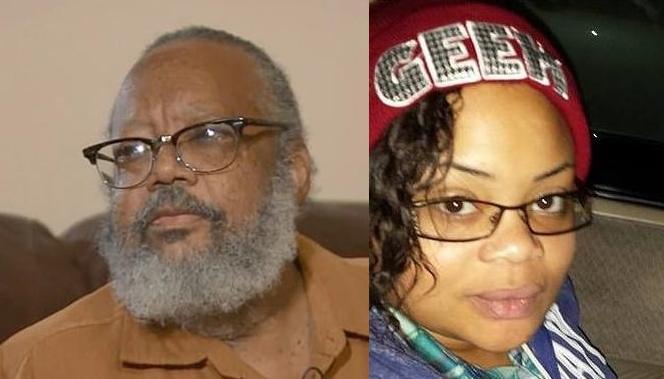
The father of Atatiana Jefferson has died, less than one month after a police officer killed his 28-year-old daughter by shooting through the bedroom window of her own home. Atatiana’s father, Marquis Jefferson, 59, died after suffering a heart attack. The family spokesman said, “I can only sum it up as a broken heart.” Atatiana was his only child and she was killed exactly one month ago, on October 12, by police officer Aaron Dean. The spokesman, Bruce Carter, said Jefferson had been under a lot of stress since his daughter was killed and was also battling Chronic Obstructive Pulmonary Disease, which makes breathing difficult.
Jefferson had been embroiled in a family dispute involving his daughter’s funeral and burial arrangements, which were controlled by her aunt, Bonita Body. He argued that as the surviving parent of Atatiana, he should have control of her burial, and was granted a temporary restraining order to postpone the funeral. The service eventually took place on October 24. “He was battling to be a part of her life to the end,” Bruce Carter, the family’s spokesperson, said. “I think it just got the best of him.”
Lee Merritt, attorney for Atatiana Jefferson’s family, said in a statement they were saddened to learn the news about Marquis Jefferson and “of course” the loss his daughter factored into his death. “Her death rocked the nation but no one felt it more than the people that were directly tied to her in life,” Merritt said. “Those people haven’t had a chance to grieve like normal families. They have been thrust into a very public, very emotional, very draining fight for justice.”
On October 12, at around 2:30 a.m., Dean had arrived at Atatiana’s Forth Worth residence with another officer in response to a non-emergency “wellness check” called in by a neighbor who noticed Atatiana had left her front door open. Atatiana was playing video games with her 8-year-old nephew when she heard noises outside of her home. According to her nephew, she took her handgun from her purse and pointed it “toward the window” just before getting shot by Dean. The two men did not identify themselves as police when they approached the window where Atatiana stood.
Body camera footage showed Dean looked inside a window using a flashlight, spotted someone inside standing near a window and said, “Put your hands up — show me your hands.” He shot seconds later. At no point did he identify himself as an officer and he did not appear to have knocked on the door. Dean resigned from the police department shortly afterward, and was arrested and charged for Atatiana’s murder. He is currently out on a $200,000 bond.
Dean completed police training at the Fort Worth Police Academy in March 2018 and at the time of the shooting, had been with the department for 18 months. Prior to the shooting, the only entry in his Fort Worth police personnel file was about a traffic collision. Dean’s training records from his first year on the job note concerns from supervisors which included that he had “tunnel vision” and “needs improvement on communicating with the public and fellow officers.” Dean’s most recent performance evaluation was made in spring 2019, where he received high marks from a supervisor.
Read more
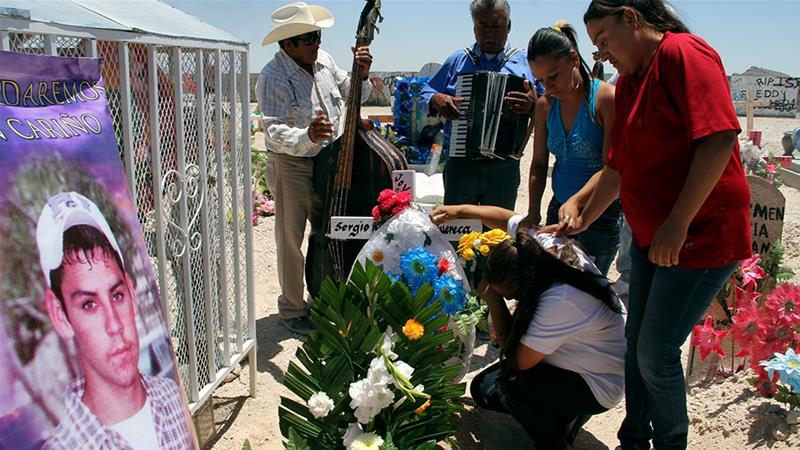
The Supreme Court began hearing oral arguments in the case of slain Mexican teenager killed by a US Border Patrol agent. The court heard arguments in the family’s appeal of a lower court’s ruling dismissing their case against the agent, Jesus Mesa, who had fired across a concrete spillway into Mexico from the Texas side of the border during the 2010 incident, striking 15-year-old Sergio Adrian Hernandez Guereca in the face.
The incident took place in June 2010 on the border between El Paso and Ciudad Juarez in Mexico. The Border Patrol said at the time Hernandez was pelting U.S. agents with rocks from the Mexican side of the Rio Grande when he was shot. Witnesses say Sergio and his friends were playing a game of chicken where they would run up the embankment, touch the barbed-wire fence on the U.S. side, and then sprint back. As they were playing, smugglers were nearby, throwing rocks at U.S. Customs and Border Protection agents. At some point, Agent Jesus Mesa, Jr. showed up on a bicycle and detained one of Sergio’s friends. Sergio ran back into Mexican territory and hid behind a bridge pillar. Standing on U.S. soil, Agent Mesa fired at least two shots across the border at Sergio, striking him in the face and killing him.
Following Sergio’s death, his parents, Jesus Hernandez and Maria Bentacour, sued the United States government, Agent Mesa, and Mesa’s supervisors. Their attorneys argue that Sergio—despite being a Mexican national—was nevertheless protected by the Fourth and Fifth Amendments, since he was killed by a federal officer who fired from American soil. The U.S. Department of Justice investigated the shooting but decided in 2012 it was “a reasonable use of force or would constitute an act of self-defense.” Federal prosecutors refused to indict Mesa. The Mexican government, on the other hand, charged Mesa with murder, but the United States won’t extradite Mesa so he can face trial.
With criminal prosecution off the table, Sergio’s family sought justice through a civil lawsuit. During arguments, liberal justices expressed concerns over providing no legal relief to the families of people who have been killed in cross -border shootings by U.S. agents, essentially allowing federal officers on American soil to act unlawfully with impunity. During the arguments, conservative justices appeared to lean toward the administration’s concerns while liberal justices voiced worry about leaving individuals with no way to hold federal officers accountable for unlawful conduct. The court has a 5-4 conservative majority.
The dispute hinges on whether the family, despite Hernandez having died on Mexican soil, can seek monetary damages against what they call a “rogue” agent for violating for the U.S. Constitution’s Fourth Amendment, which bars unjustified deadly force as well as Hernandez’s right to due process under the Constitution’s Fifth Amendment. For the family’s lawsuit to move forward, the Supreme Court would have to widen the scope of its 1971 decision allowing certain suits against federal officials. That case, referred to as the Bivens action, involved a domestic search.
The high court previously considered Hernandez’s case in 2017 but did not decide the central legal question, instead directing the New Orleans-based 5th U.S. Circuit Court of Appeals to reconsider its ruling that had barred the lawsuit. The 5th Circuit last year again ruled against the family, prompting a second trip to the Supreme Court where they will again decide if the Bivens act should be extended and Mesa held accountable.
Read more
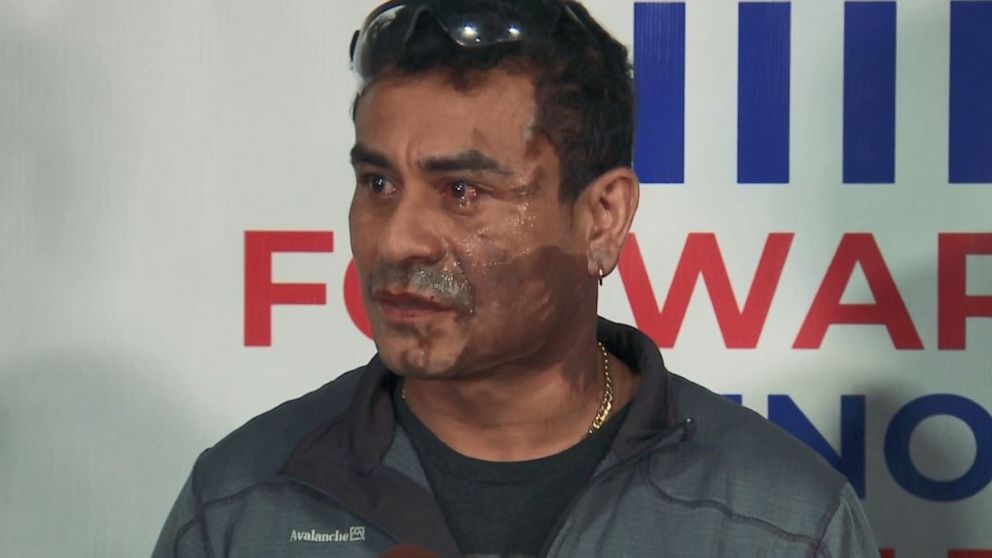
A Milwaukee man faces a felony hate-crime charge for an alleged acid attack on a man who says he was targeted for his Latino identity and left with second-degree burns. Clifton Blackwell, 61, has been charged with first-degree reckless injury in a hate crime using a dangerous weapon. Reckless injury carries up to 25 years in prison and $100,000 in fines. Prosecutors are pursuing hate crime and dangerous weapon enhancements charges which means Blackwell could face stiffer penalties, including up to 10 more years’ imprisonment.
At a news conference the day after the assault, Mahud Villalaz, 42, said he parked his truck outside a restaurant at 8:30 p.m. and began to walk toward it to have dinner when a man at a nearby bus stop approached him and chastised him for parking in a bus lane. Villalaz said, the man asked why he’d “invaded” the United States and said “Why don’t you respect my laws?”
Realizing he was parked too close to a bus stop, Villalaz moved his truck to another spot and headed toward the restaurant. Blackwell re-engaged him saying “Why did you invade my country?” calling Villalaz an “illegal” and cursing at him while telling him to “go back.” He told Blackwell that “everyone comes from somewhere first” and pointed out that “American Indians have been in the country the longest,” court filings state. Villalaz said that’s when Blackwell got angry and tossed the acid, which was in a small silver bottle, in his face. The attack was caught on surveillance video.
Villalaz was taken to the hospital with second-degree burns to his face, cheek and neck, as well as damage to his clothing, according to police. Testing showed that acid caused the injuries. The attack took place just outside the restaurant doors. Witnesses say Villalaz, a regular at the restaurant, burst through the doors crying with his face searing with acid. The restaurant staff tried everything to wash the acid from his face until paramedics arrived.
Villalaz, who says he grew up in Peru and immigrated to the United States as a young man – became a citizen in 2013. He said he felt relieved charges were filed and thankful at the nationwide support he’s gotten. “It’s been nice to know that there are many people here that worry about other people. Not only Latinos … people of all colors. We must unite,” Villalaz said.
During a search of Blackwell’s home, police found hydrochloric acid, four bottles of sulfuric acid and two bottles of drain opener made of lye, according to court documents. Blackwell’s bond has been set at $20,000 on the condition that he wears an electronic monitoring device. He is also forbidden from contact with acids or large batteries. Court records indicate Blackwell has previously been convicted of false imprisonment and pointing a gun at a person.
According to the criminal complaint, on Nov. 19 2006, Blackwell confronted four men, two with rifles, who had come onto his farm tracking deer in the Town of Lawrence. Blackwell pointed a loaded rifle at the men and told them to disarm, then marched them back to his house where he photographed their faces and hunting tags. He told them they were guilty of criminal trespass and called the sheriff’s office but wound up charged himself. Prosecutors dropped one of each of the charges, and Blackwell pleaded no contest to one count each of pointing a firearm and false imprisonment. He was sentenced to 379 days in jail. Blackwell’s mother said he had served in the Marine Corps during the U.S. invasion of Panama in 1989 and had moved back to Wisconsin for treatment for PTSD type problems. Officials with the Marine Corps Manpower and Reserve Affairs office in Virginia said it could find no record of Blackwell ever serving in the Marines.
Read more

A Manhattan judge has dismissed Uber Technologies Inc’s lawsuit challenging a New York City law limiting the number of licenses for ride-hailing services, the first such cap by a major American city. New York State Supreme Court Justice Lyle Frank rejected Uber’s argument that the city wrongly gave its Taxi and Limousine Commission power to enforce the cap.
Frank was also unconvinced that the cap, part of Local Law 147, would impede state efforts to reduce traffic congestion through “congestion pricing” on vehicles entering high-traffic areas of Manhattan. The August 2018 law was meant to give New York City greater oversight of ride-hailing companies such as Uber and Lyft Inc. It includes a one-year freeze on new licenses to for-hire vehicles, which was later extended through August 2020.
The law, which the City Council passed, required the Taxi and Limousine Commission (TLC) to conduct a one-year study on the possibility of regulating the number of for-hire vehicle licenses and to stop issuing new for-hire vehicle licenses for that year. The study, which was released in June, found that reductions on FHV-related traffic could “meaningfully impact overall traffic conditions.” The one-year cap was then extended this past summer.
Uber’s lawsuit argued, among other things, that the city exceeded its authority in enacting the law because the state allows the city to cap taxis but not app-based or other for-hire vehicles. But Judge Lyle E. Frank said in his decision to toss the lawsuit that the City Council acted within its rights when it allowed TLC to adjust the number of for-hire vehicle licenses.
Bill Heinzen, acting TLC commissioner, said in a statement “We are grateful the court has again recognized the TLC’s power to address the problems that companies like Uber have created by flooding the streets of NYC. Drivers are bringing home an additional $750 a month on average because we fought back against their tactics, and the Mayor and TLC will continue to fight for less congestion and better pay for drivers.”
The legislation also allows New York City to set a minimum wage for drivers with Uber, Lyft and other ride-hailing services. The case is separate from Uber’s Sept. 20 challenge to a New York City “cruising cap” rule limiting how much time its drivers could spend without passengers in Manhattan south of 96th Street.
Uber has drawn criticism from many cities that its vehicles increase congestion, and commandeer business from taxis. The value of medallions, which are permits needed to operate yellow taxis in New York City and are distinct from ride-hailing licenses, has plunged as Uber and Lyft gained popularity. Taxi workers have long supported measures like the cap on for-hire vehicles to reduce the amount of vehicles driving around the city, as they face crippling amounts of debt due to a dramatic decrease in the value of medallions.
Read more
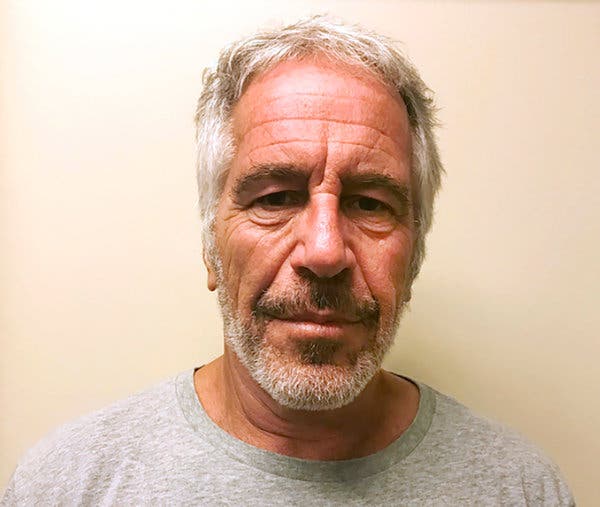
A forensic pathologist hired by the brother of Jeffrey Epstein says the injuries that killed the multimillionaire sex abuser were consistent with strangulation — not a death by suicide, as a New York medical examiner reported. Dr. Michael Baden says a broken bone in Epstein’s neck is “extremely unusual in suicidal hangings and could occur much more commonly in homicidal strangulation.” The claim by Dr. Michael Baden, a former New York City medical examiner who has worked on high-profile cases during a five-decade medical career, is certain to reignite suspicions that surfaced immediately after Epstein.
Epstein was found dead in his Manhattan jail cell on August 10th as he awaited trial on federal sex trafficking charges. Epstein once counted President Trump and former President Bill Clinton among his high-profile friends. Prosecutors alleged that the previously convicted sex offender paid girls as young as 14 hundreds of dollars for massages before he molested them in his homes in New York and Palm Beach, Fla., between 2002 and 2005. Since he was awaiting trial in federal prison, federal agencies had jurisdiction over the investigation into his death.
Baden noted that the 66-year-old Epstein had two fractures on the left and right sides of his larynx, specifically the thyroid cartilage or Adam’s apple, as well as one fracture on the left hyoid bone above the Adam’s apple. “Those three fractures are extremely unusual in suicidal hangings and could occur much more commonly in homicidal strangulation.” There were also hemorrhages in Epstein’s eyes that were common in homicidal strangulation and uncommon, though not unheard of, in suicidal hangings, the forensic pathologist said.
While there’s not enough information to be conclusive yet, the three fractures were “rare,” said Baden, who’s probed cases involving O.J. Simpson, President John F. Kennedy, Martin Luther King, record producer Phil Spector, New England Patriots star Aaron Hernandez and many others. “I’ve not seen in 50 years where that occurred in a suicidal hanging case,” the 85-year-old said.
The ligature, or item used to tie something tightly, allegedly was made from a sheet that had been twisted and put around Epstein’s neck, Baden said. Evidence on the cloth material could help prove whether or not someone else was involved in Epstein’s death. “Whoever it is would have their DNA all over the ligature,” he said. “We don’t have those results yet,” he added, saying those results “should be reported quickly to give an idea and lessen the speculation.”
Chief Medical Examiner Dr. Barbara Sampson said in a statement that she is standing by her findings. “Our investigation concluded that the cause of Mr. Epstein’s death was hanging and the manner of death was suicide. We stand by that determination,” she told Fox News in a statement. “We continue to share information around the medical investigation with Mr. Epstein’s family, their representatives, and their pathology consultant. “The original medical investigation was thorough and complete,” she continued, adding that “there is no reason for a second medical investigation by our office.”
Read more
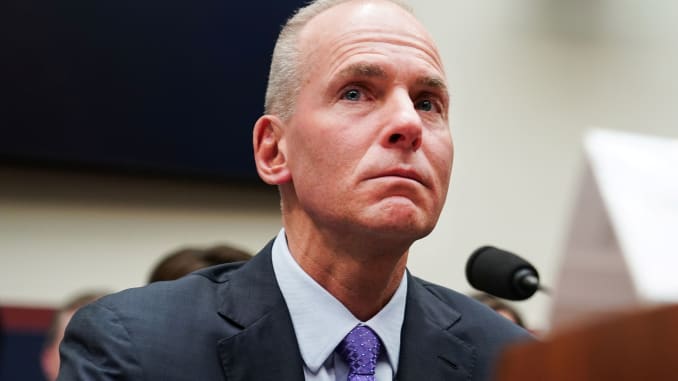
Boeing CEO Dennis Muilenburg testified before a pair of congressional committees for the first time since two deadly crashes of 737 MAX airliners, which killed a combined 346 people. His testimony follows a report in the Washington Post that top Boeing executives failed to intervene after two top pilots at the company identified problems with automated flight control software that would lead to the crashes in Indonesia and Ethiopia. The Justice Department is also conducting criminal investigation against Boeing. Muilenburg admitted Boeing failed to provide pilots with additional key safety system information.
During the hearing, Muilenburg acknowledged for the first time that he had been briefed, prior to the second crash, of messages from a test pilot who had raised safety concerns about the 737 Max. Boeing said it gave those messages to the Department of Justice in early 2019, but only alerted the Federal Aviation Administration and Congress to the existence of those messages in the past few weeks.
The House Transportation Committee released a redacted copy of a 2015 email in which a Boeing expert questioned making the flight system called MCAS depend on just one sensor to measure the plane’s pitch — its “angle of attack,” or AOA. Boeing went ahead with the single-sensor design, with no backup to prevent MCAS from pushing the plane into a dive. Investigators believe faulty readings from a single sensor triggered nose-down commands before both crashes. Muilenburg explained changes Boeing is making to the Max and other steps it is taking to improve safety. He conceded that the company “made some mistakes” in designing MCAS and telling regulators and pilots about the system.
Members of the House Committee on Transportation and Infrastructure also focused on why Boeing decided to only have one sensor on the outside of the plane, with no back-up, to alert pilots when the angle of the aircraft was off. They also asked why the plane’s safety system only gave pilots four seconds to react to take back control of the plane if a malfunction occurred. While acknowledging that Boeing planned to make fixes to the craft, some lawmakers also questioned why the company took so long to come to that conclusion. “We would do it differently if we knew what we know today,” Muilenburg said.
Several committee members pressed the CEO to make more changes in the aftermath of the crash, including giving up some of the $15 million in pay and bonus he received last year, out of $23 million in total compensation for 2018. Boeing successfully lobbied regulators to keep any explanation of the system, called MCAS, from pilot manuals and training. After the crashes, the company tried to blame the pilots, said Senator Richard Blumenthal, Democrat from Connecticut. “Those pilots never had a chance,” Blumenthal said. Passengers “never had a chance. They were in flying coffins as a result of Boeing deciding that it was going to conceal MCAS from the pilots.”
Representative Albio Sires also read a worker email sent to the head of Boeing’s 737 production team in mid-2018 that claimed high production goals were straining workers and increased the potential for mistakes. “For the first time in my history with Boeing I would be hesitant about putting my family on a Boeing airplane,” wrote the veteran Boeing employee. Muilenburg said he only became aware of the worker’s concerns after the Lion Air 737 Max crash October 29. He said the 737 production line was working at a “high rate” at the time and the issues raised by the now-retired employee had been investigated and addressed. Boeing, in fact, never cut back the production of the planes, despite the concerns. 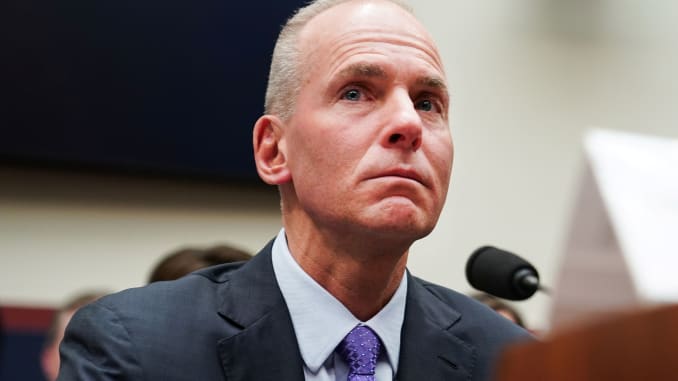
Read more
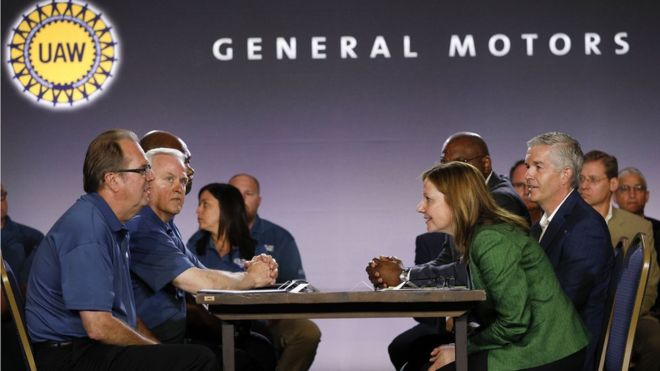
After a 40-day strike, a new four-year deal between the United Auto Workers and General Motors was approved. The contract was supported by 57% of the labor union. It includes an $11,000 bonus per member, annual raises and more affordable healthcare. General Motors still plans to close three factories in the United States.
The United Auto Workers union emerged with substantial wage increases of 3 percent in the second and fourth years and 4 percent lump sum payments in the first and third years, similar to what the union obtained in 2015. Even larger gains are in store for those in a category called “in progression,” the lower scale of a two-tier wage system negotiated in 2007 when the Detroit automakers were financially reeling.
Workers hired after that date, about a third of the overall work force, started at about half the pay of veteran employees and had no prospect of reaching the top wage, currently $31 an hour. Over the course of the new contract, the disparity will be phased out, and those with four years’ experience will rise along with more senior workers to the new top level of $32 an hour. In addition to pay increases, G.M. workers will get bonuses of $11,000 for ratifying the contract. They will continue to pay 3 percent of their cost of health care, well below the percentage that G.M.’s salaried workers contribute.
There were also rewards for temporary workers, about 7 percent of G.M.’s union work force, who will have a path to permanent employment after three years. About 900 of them will become full employees in January, the union said, and 2,000 more by 2021.
It also won commitments to new G.M. investments in United States factories. As part of the new contract, the company pledged to invest $7.7 billion in its United States plants, and another $1.3 billion in ventures with partners, providing a measure of job security. G.M. will put $3 billion toward overhauling the Detroit-Hamtramck plant, which had been scheduled to close in January. Three-quarters of the 700 workers there voted in favor of the contract.
At the same time, the agreement allows G.M. to close three idled factories permanently, including one in Lordstown, Ohio, eliminating excess manufacturing capacity at a time when auto sales are slowing. It also puts the company in a more stable position if the economy goes into a recession. The closing of the Lordstown plant was one of the main sticking points for some workers voting against the contract. “We did everything that G.M. ever asked of us at times of concessions,” said Bill Goodchild, a member of Local 1112 in Lordstown. “We feel we deserve a product.”
About 48,000 United Auto workers walked off the job over one month ago, making it the longest national strike at GM by United Auto Workers in nearly 50 years. The contract finally ends a strike that many estimate has cost GM $1.75 billion in losses. “We delivered a contract that recognizes our employees for the important contributions they make to the overall success of the company,” G.M.’s chief executive, Mary T. Barra, said in a statement.
Read more
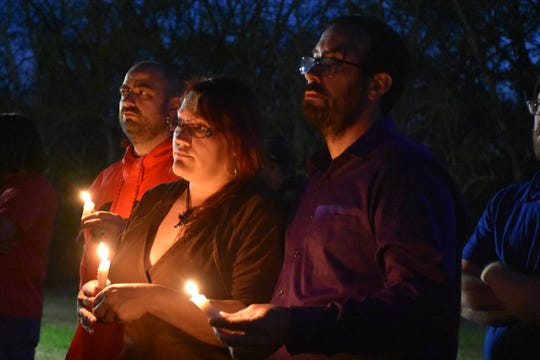
As the GM strike continues, picketers received some bad news from Tennessee. A striking United Auto Worker union member was hit by a car and killed outside the General Motors plant in Spring Hill where workers were maintaining an active picket line. The UAW said in a statement that 55-year-old union member Roy McCombs “tragically lost his life today on a picket line standing up for a better life for himself and his coworkers.”
McCombs was hit on a bridge outside the GM plant as he was crossing the road to get to the picket line around 6 am. McCombs was transported to a hospital and pronounced dead in the emergency room, said Lt. Jeremy Haywood of the Columbia police department in Columbia, Tennessee. The driver who hit McCombs was cooperating with investigators.
Local 1853 Chairman Mike Herron said, “Sergeant Orlando Cox from the Columbia Police Dept. will be releasing a statement shortly that will describe this event as an innocent tragic accident. He has asked that everyone refrain from going to the South Gate for safety reasons. He requested that any vigils be held at our union hall and not in the vicinity of this accident — to ensure the safety of the participants.”
Herron said the UAW local sends thoughts and prayers to McCombs’ family as well as the driver, “who was on her way to drop off her kids at the day care center located at the south exit when this tragic accident occurred.” All strike activity has ended at the South Gate of the plant and no pickets will be set up there in the future, Herron said. Also, the UAW crisis team has been called in and will meet personally with UAW members that were on the South Gate at the time of the accident as well as McCombs’ coworkers on the third shift.
UAW members at Spring Hill have taken part in picketing as part of the union’s nationwide strike against GM since Sept. 16 though it’s been contentious from the start. Maury County sheriff’s deputies in Tennessee had arrested nine protesters on Sept. 18 when they refused to stop blocking the south entrance to the plant. A 10th arrest came when someone drove recklessly through plant’s entrance, sheriff’s officials said.
A court in Tennessee granted GM’s request to prevent UAW picketers from blocking the entrance to the factory. The order was in effect until Oct. 8. It followed several arrests at the plant since GM’s 46,000 UAW workers went on strike. “After dialogue failed to stop the incidents of harassment, violence and vandalism by a few people, we had to take necessary actions to protect everyone involved,” GM said at the time. The order barred the UAW and its members from blocking entrances, detaining vehicles, creating obstructions on roadways or “assaulting, intimidating, falsely imprisoning, harassing or destroying the property of GM employees” and others at the plant.
Read more

Britain police launched one of the largest murder investigations in decades after the bodies of 39 people were discovered in the back of a tractor-trailer at an industrial park east of London. Emergency services were called to an industrial park in the town of Grays in Essex, 20 miles east of London, at around 1:40 a.m. local time when the vehicle was discovered to have people inside. Thirty-nine people were pronounced dead at the scene.
The victims were found in the refrigerator unit inside the truck. Police confirmed that there were 8 women and 31 men inside the truck. The Essex police department said it was not immediately clear if the victims froze to death or suffocated. A police spokesperson said the truck had a Bulgarian license plate and entered the U.K. in Holyhead, Wales on October 19th. Holyhead is one of the busiest ferry ports in the area with primary service to Ireland. Authorities called such a route into the U.K. “unusual.”
Investigators believe the refrigerated trailer started its deadly journey in Zeebrugge, Belgium to Purfleet, England, where it arrived early Wednesday. Police believe it the tractor traveled from Northern Ireland to Dublin, where it took a ferry to Holyhead in Wales before picking up the trailer at the dockside in England. They have also suggested that two different trucks pulled the semitrailer at different times though it is not clear when the 39 people entered the refrigerated trailer.
Soon after, UK police have charged a 25 year old truck driver with 39 counts of manslaughter and conspiracy to traffic people in connection with 39 deaths in the back of the truck he was driving in southeastern England. Police say Maurice Robinson, 25, of Craigavon, Northern Ireland. He was the first of five people arrested in what is seen as one of the U.K.’s biggest cases of human trafficking.
U.K. police are struggling to identify the victims and said that very few documents were found inside the truck. Authorities said the task is likely to be difficult since human traffickers normally take the passports of their passengers to obscure their identities, stripping them of their names and giving them new documents when they arrive at their destinations. The victims are believed to have come from Asia and autopsies are being performed.
U.K. police say they’ve been in contact with Vietnamese authorities, even though they are not yet certain of the identities of those found dead in the refrigerated truck. The Vietnamese Embassy in London has set up a hotline for families to call about missing family members. The Vietnamese government has also announced its own investigation into the deaths. “The Embassy has sent a team led by the minister-counsellor in charge of consular affairs to Essex, England. They have met with the local police in an effort to verify the identity of the deceased, whose nationality still cannot be confirmed,” according to a statement from an embassy spokesperson.
Each year thousands of migrants die attempting to cross into Europe. Many sink to the bottom of the Mediterranean Sea without a trace. Others die on land and mountain routes. The International Organization for Migration estimates that 4,503 people are known to have died worldwide in 2018, with the highest number perishing in the Mediterranean Sea.
Read more

Phoenix Police Chief Jeri Williams has fired Police Officer Christopher Meyer, who threatened to shoot a family after their 4-year-old daughter took a doll from a Family Dollar store. The incident was captured in a viral cell phone video that shows Phoenix pointing a gun at the family’s car and threatening to shoot the girl’s father, Dravon Ames, in the face. The girl’s mother, Iesha Harper, is heard saying she is unable to hold her hands up because she is holding a child and that she is pregnant.
Meyer was one of a group of officers seen on video drawing his gun and cursing at Iesha Harper, who was pregnant and holding a baby, and her fiance, Dravon Ames. Officers were responding to a complaint about shoplifting last May. When questioned, the couple said they were unaware their 4-year-old daughter had taken a doll from a store. Police had said it went beyond shoplifting, and that the father refused to comply with commands several times.
The video prompted an immediate backlash when it surfaced in June. At a separate news conference, Ames and Harper said the officer’s dismissal should have happened a lot sooner but they were pleased nonetheless. The couple has filed a $10 million claim against the city. A second officer who was present will receive a reprimand for using foul language. But video shows he tried to calm the situation, Williams said. Williams rejected the Disciplinary Review Board’s recommendation that Meyer be suspended for six weeks. Instead, she fired him, saying “a 240-hour suspension is just not sufficient to reverse the adverse effects of his actions on our department, and our community.”
The decision to fire officer Meyer comes as Phoenix police announced the firing of another officer, Detective Dave Swick, who was involved in a Facebook database that tracked posts of current police officers across the United States that advocated for violence against Latinos, Muslims and women. Swick was fired do to facebook posts that were flagged as racist. Williams said her decision to let Swick go was “based on the number and the nature of the social posts.” Williams added that a total of 72 officers were flagged for their social media activity. Nine other officers were suspended following their investigation. A third officer who is under a criminal investigation for undisclosed reasons was also fired.
As a result, the Phoenix Law Enforcement Association is now pondering filing a vote of no confidence in Williams because they feel her firing of Meyer was too harsh. Count Phoenix Councilman Sal DiCiccio is among those outraged by Williams decision saying she “gave into mob rule” from those who dislike the police. PLEA President London said the union has received 200 to 300 calls and emails from officers asking for a vote of no confidence over Williams’ decision to fire Meyer and Clinton Swick, who was terminated over his social media posts.
The Phoenix Law Enforcement Association released a statement: “The Phoenix Law Enforcement Association (PLEA) has a complete understanding of the position Chief Jeri Williams is in as the leader of the Phoenix Police Department and as an appointed employee of the City of Phoenix. However, we do not agree with the decision to terminate the employment of Officer Christopher Meyer and Detective Clinton Swick. PLEA is dedicated to its members, and we ensure that we carry our members’ interests through until the end of all the processes that encompass employment with the City of Phoenix. An appeal hearing is in order, as the Discipline Review Boards for both Officer Christopher Meyer and Detective Clinton Swick recommended suspensions without pay that were on the lower spectrum of the discipline class. Neither Discipline Review Board, which are composed of community members and police employees, recommended terminating either Officer Meyer or Detective Swick.”
Read more