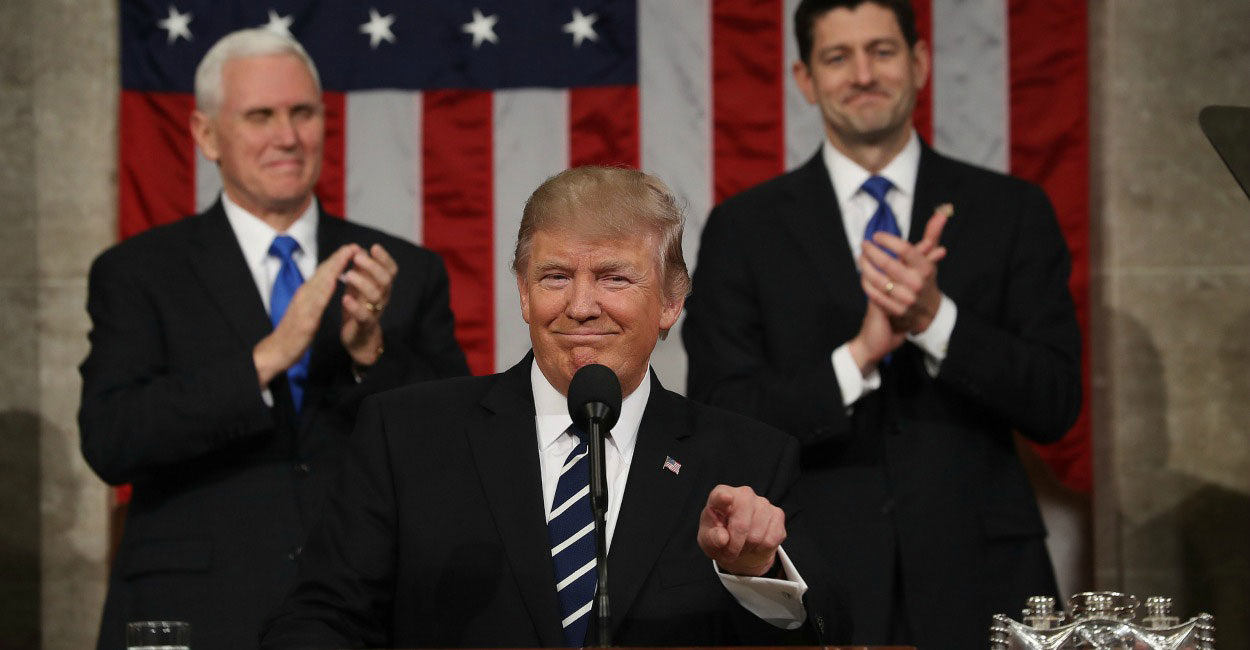
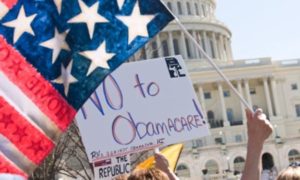
Congressional leaders in the U.S. House of Representatives on Monday released their long-awaited plan for the dismantling of the ‘Affordable’ Care Act (ACA), commonly referred to as Obamacare.
The 123-page bill, called the American Health Care Act, would replace the ACA’s income-based premium tax credits with fixed, age-based tax credits that generally would be smaller. It would end enhanced federal funding for states to expand Medicaid to low-income adults. And it would convert Medicaid from an open-ended entitlement to a program of capped, per-capita payments to the states.
The plan would also repeal Obamacare’s statute assessing the unpopular fines on people who don’t have health insurance, and do not qualify for an exemption. It also allows insurers to increase premiums on those who have gone without insurance for a period of time.
WHAT THE BILL DOES NOT CHANGE:
The bill keeps in place two of the most popular Obamacare provisions: those with pre-existing conditions cannot be denied coverage, and young people can stay on their parent’s health insurance plans until they reach the age of 26.
WHAT WE DO NOT KNOW YET ABOUT THE LEGISLATION:
The cost and number of people who might choose to go without insurance is still unclear. The bill has not yet been scored by the Congressional Budget Office, a nonpartisan congressional research office that provides guidance on economics and the budget for Congress.
The CBO’s guidance will provide information about how many Americans could potentially lose their coverage or opt-out of insuring themselves and the full cost of the bill.
This piece of legislation maintains exemptions that employer-plan premiums currently enjoy, but congressional leaders predict that they will still be able to save money from tax refunds from the repealing of ACA spending and taxes.
 President Trump has railed against the ‘Affordable’ Care Act, calling it a “horrible disaster” and a “lie” and made its replacement a top priority. In fact, some insurance carriers have publicly proclaimed that President Barack Obama’s signature heath reform legislation, had now fallen into a “death spiral”, with one-third of the country being served by only one insurer, and rate hikes that in some states were over 112% higher than their 2016 premiums.
Congressional leaders acknowledge that their plan may cover fewer people, saying that unlike ObamaCare, they are not forcing people to buy coverage through a mandate – it will be up to the individual consumer to decide if they wish to purchase the insurance, and which plan they choose instead of the government mandating plans. They say their system is less intrusive and provides people a tax credit without mandates or a range of tax increases.
To pass the bill through the reconciliation process and avoid a Senate Democratic filibuster, Republicans will have to convince the Senate parliamentarian that ALL the provisions of the bill are germane to the budget. And the bill can’t be deemed to increase the federal deficit 10 years or more from now. Some of the bill’s insurance market changes may have a tough time surviving those procedural tests. By using the budget reconciliation process, the U.S. Senate can pass the bill with a simple 51 vote majority – not the normal 60 votes which would require Democratic support.

Congress had completed the initial phase of a three-step process to kill Obamacare in January, by passing in a vote of 51 to 48, and followed up by a 227-198 vote in the House, a budget resolution to repeal and replace Obamacare.
The new budget reconciliation legislation (Step 2) introduced this week is now in committee, and will then go up for a vote in both houses of Congress, possibly later this month in March. If the Senate gets its 51 votes and the House gets its simple majority, the reconciliation will pass. Only then will the parts of Obamacare detailed within this week’s bill be repealed. The rest of it will have to be disassembled, possibly piecemeal, with bipartisan support in what would be Step 3 later this year.
* * * * * * * * * * * * * *
At Health Insurance 4 Everyone, we not only want to improve our customer service but also interact with our customers on a social media level that was not available before. Interested in connecting with us? Look us up on….
Twitter: Healthinsurane4 
Click-On for LinkedIn: LinkedIn
Like us on facebook: HealthInsurance4Everyone
Follow Mark Shuster, Founder/Owner at Health & Life Solutions, LLC for daily health tips! HealthInsurance4Everyone or Health & Life Solutions, LLC
Mark Shuster FaceBook Link
Follow our word press blogs and read about everything from health insurance and reform news to healthy living and current events! 
Company Blogs
Find out more about LegalShield, our corporate partner which gives you the power to talk to an attorney about any legal issue, and offering high-quality Identity Theft protection plans. 
LegalShield
Read more
Jewish community centers (JCCs) and schools in a dozen US states have reported waves of bomb threats. It was the fourth wave of nationwide bomb threats against JCCs in the last five weeks. In total, 69 threats have been reported against 54 Jewish Community Centers.
The JCC Association of North America reported that since the beginning of the year, there have been 69 incidents at 54 Jewish Community Centers in 27 states and one Canadian province. Some of the centers that received threats are in Chicago, Buffalo, Houston, Tampa, Nashville, New Jersey, Manhattan and Long Island. All of the bomb threats were determined to be hoaxes.
At a Jewish cemetery in University City, Missouri, the gravesites of 170 Jews were vandalized over the weekend. On President’s Day, the Nashville facility, more full than usual with people exercising on the holiday weekend, was evacuated before security gave the all-clear.
Across the United States, Jewish communities are struggling to deal with this new wave of threats. The calls may not have resulted in violence yet but the intimidation has been felt across the country. American Jews are victims of more reported hate crimes than any other group in the United States and have been subject to the majority of religiously motivated offenses every year since 1995, according to FBI statistics. The threats and vandalism contribute to an atmosphere of anti-Semitism already well-established in the United States.
Dave Simon, the executive director of the JCC in Albuquerque, which has received multiple recent threats said “ The JCCs are equipped to handle these kinds of threats. Some, like Nashville, have full-time security staff, and members seem to understand the need for security. People don’t seem to be staying home; they’re still showing up to community events, swimming classes, and pre-school, all of which are central parts of JCC life.”
Nashville has gotten letters and postcards of support from Massachusetts, Vermont, and Washington State. The neighboring Catholic parish and local Islamic center sent messages of support as well. The attacks have been widely denounced by Jewish organizations and political leaders alike.
President Trump received heavy criticism after he chastised a Jewish reporter and told him to “sit down” at his news conference when the reporter asked about the bomb threats. Reporter Jake Turx was cut off by Trump and chastised for not asking a simple question. Trump added, “So here’s the story, folks. Number one, I am the least anti-Semitic person that you’ve ever seen in your entire life.”
Jewish leaders were disappointed that the president didn’t take the opportunity to denounce the waves of attacks and anti-Semitism. Trump did finally speak out during a visit to the National Museum of African American History and Culture in Washington on Tuesday when he said that the anti-Semitic threats are “horrible,” “painful,” and a “very sad reminder of the work that still must be done.”
Read more
The Trump administration announced that it will enforce federal laws barring the use of marijuana, reversing an Obama administration policy that gave wide latitude to states to determine their own pot laws. Eight states – Washington, Oregon, California, Nevada, Alaska, Colorado, Massachusetts, and Maine – and Washington, D.C. have legalized both medicinal and recreational marijuana. The Obama administration had opted not to enforce federal prohibitions in states that had passed legislation legalizing the drug. It’s classified as a Schedule 1 drug — putting it in the same category as heroin — and the government can restrict cross-state shipment and financing as a result.
White House Press Secretary Sean Spicer said the Trump administration would prioritize enforcement in states that have passed laws allowing for the recreational—rather than medical—use of the drug. Just a day after the announcement, publicly traded shares of marijuana-related companies were tumbling and executives at recreational marijuana businesses were expressing their disappointment in the announcement.
The announcement was not a surprise to legalization advocates after Trump’s nomination of Alabama Sen. Jeff Sessions as attorney general. Many advocates feel that Mr. Sessions has been “the single biggest opponent to legalization in the US Senate.”
In August 2013, a four-page directive issued by then-Deputy Attorney General James M. Cole essentially instructs that a hands-off approach be taken by the federal government in states that have voted on laws to legalize marijuana, regardless of the fact that marijuana is illegal at the federal level. The directive has been dubbed the “Cole Memo”.
President Trump has issued differing stances on marijuana legalization. In the 1990s, Trump told the Miami Herald that the US needed to “legalize drugs to win” the war on drugs. And in an interview with Fox News’s Bill O’Reilly a year ago, Trump said he was in favor of medical marijuana “a hundred percent” while also calling Colorado’s recreational marijuana industry “a real problem.”
The industry is still new and is estimated to be worth over $6 billion so the reversal will cost some states millions in revenue and a loss of jobs. Recreational marijuana retailers in Oregon sell about $7 million worth of cannabis every week, or about $364 million a year.
In 2016, the marijuana industry in Colorado created more than 18,000 new full-time jobs and over $1 billion in retail sales. The industry also generated over $1 billion in additional economic activity such as growers renting warehouse space and the purchases of sophisticating lighting and irrigation equipment. Marijuana retailers also boost the economy when they rely on other companies, like contractors, lawyers and bookkeeping services, to conduct their own businesses. If the Trump Administration’s promise of a crackdown does take effect- all of this new found revenue will be lost.
Read more
On February 9th, a federal appeals court in San Francisco unanimously upheld a suspension of President Trump’s executive order barring all refugees from entering the U.S. and restricting travel from seven Muslim-majority countries. In the unanimous decision, a three-judge panel on the 9th Circuit Court of Appeals ruled courts have the authority to review constitutional challenges to executive actions.
Last week, U.S. District Judge James Robart in Seattle issued a temporary restraining order halting the ban after Washington state and Minnesota sued. The ban temporarily suspended the nation’s refugee program. After the ban was put on hold, the State Department quickly said people from the seven countries — Iran, Iraq, Libya, Somalia, Sudan, Syria and Yemen — with valid visas could travel to the U.S. The decision led to tearful reunions at airports around the country.
Justice Department lawyers appealed to the 9th Circuit, arguing that the president has the constitutional power to restrict entry to the United States and that the courts cannot second-guess his determination that such a step was needed to prevent terrorism.
The panel declined to block a lower-court ruling that suspended the ban and allowed previously barred travelers to enter the U.S. The judges rejected the administration’s argument that courts did not have the authority to review the president’s immigration and national security decisions. They also said the administration failed to show that the order met constitutional requirements to provide notice or a hearing before restricting travel and presented no evidence that any foreigner from the seven countries cited by the travel ban had committed terrorism in the U.S.
This controversial court battle has just begun. Now, the lower court must debate the merits of the ban, and an appeal to the U.S. Supreme Court seems likely. When that happens, it could put the decision in the hands of a divided court that has a vacancy. A potential 4-4 tie would leave the appeals court’s ruling in place.
The appeals court only sided with the administration on one issue: the argument that the lower court’s temporary restraining order could not be appealed. While under 9th Circuit precedent such orders are not typically reviewable, the panel ruled that due to the intense public interest at stake and the uncertainty of how long it would take to obtain a further ruling from the lower court, it was appropriate to consider the federal government’s appeal.
Trump’s nominee, Neil Gorsuch, could not be confirmed in time to take part in any consideration of the ban. President Trump responded to the ruling on Twitter, tweeting “SEE YOU IN COURT, THE SECURITY OF OUR NATION IS AT STAKE!” The ban was set to expire in 90 days, meaning it could run its course before the Supreme Court would review the issue.
Read more
Immediately after swearing in Sessions as attorney general, President Trump signed three new executive orders addressing crime and immigration. One executive order seeks to increase penalties on those found guilty of assaulting police officers. A second order directs law enforcement agencies to increase intelligence sharing while going after drug cartels. A third order directs Attorney General Sessions to prioritize fighting “illegal immigration” alongside drug trafficking and violent crime.
President Trump also green-lighted construction of a wall along the U.S. border with Mexico, a proposal he repeatedly mentioned while campaigning. The wall is just one component of sweeping action Trump took to clamp down on immigration to the U.S. “Building this barrier is more than just a campaign promise, it is a common-sense first step to securing our border. This will stem the flow of drugs, crime, and illegal immigration into the United States. And yes, one way or another, as the President has said, Mexico will pay for it,” White House spokesman Sean Spicer said.
Other actions recently taken by President Trump include:
- Ending federal grant funding to sanctuary cities and states, which opt out of reporting undocumented immigrants.
- Ordering the Department of Homeland Security to allocate funds or establish contracts for the construction or operation of detention facilities.
- Ending the policy known as “catch and release,” under which some immigrants are released from detention while they await a hearing with an immigration judge.
- Prioritizing the deportation of immigrants who have committed crimes.
During the White House press briefing on Wednesday, Spicer reiterated earlier statements that the President’s priority would be on criminals. “His priorities, first and foremost, are the people in this country that seek to do us harm,” he said.
Reactions to the immigration actions were swift from eight immigration and refugee-rights groups who joined a conference call to denounce the new orders. They argue that the orders make the U.S. less safe and tear apart families and communities across the country. Advocates said the executive orders are “anti-immigrant, anti-refugee and anti-religious freedom”. None of the advocacy organizations that were on the call had been briefed or received any guidance from the Trump Administration on the orders and future immigration plans.
Advocacy groups are preparing to take legal action and provide lawyers to protect people who are concerned about pending visa applications, hate crimes and continued confusion at the U.S. border. Many mayors of U.S. cities who have adopted sanctuary policies have said they are ready and willing to push back on Trump’s funding plans.
Read more
The Army Corps of Engineers appears ready to approve the final permit required to build the $3.8 billion Dakota Access pipeline. The Dakota Access project has faced months of resistance from hundreds of indigenous nations and non-Native allies. Policing the protests in North Dakota has cost the taxpayers over 22 million dollars.
North Dakota Senator John Hoeven said that acting Secretary of the Army Robert Speer has directed the Army Corps to issue the easement for Energy Transfer Partners, the company behind the pipeline. The easement allows the company to drill underneath the Missouri River.
Energy Transfer Partners is poised to begin drilling under Lake Oahe as soon as approval is given. Workers have drilled entry and exit holes for the crossing and oil has been put in the pipeline leading up to the lake in anticipation of finishing the project. CEO Kelcy Warren has said the company should be able to finish the project in about three months once the permit is granted.
The 1,200-mile pipeline would carry North Dakota oil through the Dakotas and Iowa to a shipping point in Illinois. Dallas-based developer Energy Transfer Partners had hoped to have the pipeline operating by the end of 2016, but construction has been stalled while the Corps and the company battled in court over the crossing.
An assessment conducted last year determined the crossing would not have a significant impact on the environment. However, on Dec. 4th, then-Assistant Army Secretary for Civil Works Jo-Ellen Darcy declined to issue permission for the crossing, saying a broader environmental study was warranted. The Corps launched a study of the crossing on Jan. 18th. President Donald Trump signed an executive action Jan. 24 telling the Corps to quickly reconsider Darcy’s decision and shortly after court documents were filed that include a proposed Federal Register notice terminating the study.
The Corps has notified the remaining protesters that the government-owned land will be closed Feb. 22nd 2017. The Standing Rock Sioux and supporters fear a pipeline spill could contaminate the river, which serves as a drinking water source for millions.
Water protectors say that if the easement is granted, the government would be illegally circumventing the process of an environmental impact statement, which was ordered in December under President Obama’s administration. Members of the resistance camp Sacred Stone on the Standing Rock Sioux Reservation in North Dakota have called for water protectors to come to support the resistance to the Dakota Access pipeline.
Read more
President Trump has imposed a controversial 90-day ban on travelers from Iran, Iraq, Libya, Somalia, Sudan, Syria and Yemen. On January 27th, Trump signed the order banning travel from the seven Muslim-majority countries for 90 days and suspending all refugee admission for 120 days. Homeland Security Secretary John Kelly and Department of Homeland Security (DHS) leadership saw the final details shortly before the order was finalized.
The result was widespread confusion across the country on Saturday as airports struggled to adjust to the new directives. Stories of families separated or detained for hours starting circulating news outlets.The policy team at the White House developed the executive order on refugees and visas and avoided the traditional inter-agency process that allowed the Justice Department and homeland security agencies to provide operational guidance.
DHS arrived at the legal interpretation that the executive order restrictions did not apply to people with lawful permanent residence, referred to as green card holders. The White House overruled that guidance overnight and decided that on a case by case basis, DHS could allow green card holders to enter the US. The Department of Homeland Security decided that green card holders would be allowed to board international flights but would be considered on a case-by-case basis after passing a secondary screening.
Acting Attorney General Sally Yates announced the Justice Department would not defend Trump’s executive order temporarily banning all refugees, as well as all citizens, from the seven Muslim-majority nations. Just hours after her announcement, President Trump fired her. Yates had served in the Justice Department for 27 years and Trump had asked her to serve as acting attorney general until the Senate confirmed Sen. Jeff Sessions.
Yates is not the only one to publicly disagree with the executive order. More than 200 State Department officials and diplomats have signed on to drafts of a dissent memo that condemns Trump’s executive order. Executives at a growing number of corporations have spoken out against Trump’s immigration ban, including Google, Apple, Microsoft, Amazon, Facebook, Netflix, Tesla, Airbnb, Ford and Goldman Sachs. World-wide protests has erupted across the globe as well.
Then, Federal Judge James Robart, who presides in Seattle, halted the enforcement of Trump’s order Friday night, effective nationwide. Ruling in a lawsuit brought by the attorneys general of Washington state and Minnesota who sought to stop the order, he said the states “have met their burden of demonstrating that they face immediate and irreparable injury as a result of the signing and implementation of the Executive Order. ” He said the order adversely affects residents in areas of education, employment, education and freedom to travel.
The Department of Homeland Security announced it has suspended all actions to implement the immigration order and will resume standard inspections of travelers as it did prior to the signing of the travel ban. They said the Justice Department — which is expected to file an emergency motion to stop the order — needed to challenge the ruling “at the earliest possible time.”
Read more
Police have arrested a gunman charged with opening fire at the Islamic Cultural Centre of Quebec City during evening prayers. Canadian university student Alexandre Bissonnette, 27, has been charged with 6 counts of murder and five counts of attempted murder in the shooting that left six people dead and 19 wounded.
Witnesses described a gunman dressed in black, opening fire indiscriminately with semi-automatic weapons. More than 50 people were at the Quebec Islamic Cultural Centre when the shooting began. All the shooting victims were men and those killed ranged in age from 39 to 60. Of the four victims who remained hospitalized, two were in critical condition, authorities said.
Among the six men killed were a butcher, a university professor, a pharmacist and an accountant, according to police. The government of Guinea said in a statement that two of its citizens were among those killed in the mosque attack.
The suspect was arrested in his car on a bridge near d’Orleans, after he called 911 to say he wanted to cooperate with police. Authorities initially named two suspects, but later said the other man taken into custody was a witness to the attack and was released. Officials said they did not believe there were others involved. Police did not give a motive for the attack.
Prime Minister Justin Trudeau and Quebec Premier Philippe Couillard both characterized the attack as an act of terrorism, which came amid strong criticism around the world over Trump’s temporary travel ban for people from seven Muslim countries. Shortly after Trump’s executive order was issued, Prime Minister Trudeau announced that Canada would welcome refugees banned from entering the United States.
Federal Safety Minister Ralph Goodale told reporters in Ottawa there was no change to “the national terrorism threat level” from medium because “there is no information known to the government of Canada that would lead to a change at this time.”
According to media outlets, Bissonnette was known for far-right, nationalist views and his support of the French rightist party led by Marine Le Pen. The suspect has expressed support for Le Pen and U.S. President Donald Trump on his Facebook page. He was known to those who monitor extremist groups in Quebec, said François Deschamps, an official with a refugee advocacy group.
Bissonnette made a brief appearance in court under tight security wearing a white prison garment. Prosecutors said they do not have all the evidence yet. Bissonnette is set to appear again on Feb. 21. No charge was read in court and Bissonnette did not enter a plea.
The attack was a shock to the community of Quebec City, a city of just over 500,000 which reported just two murders in all of 2015. Incidents of Islamophobia have increased in Quebec in recent years. The face-covering, or niqab, became an issue in the 2015 Canadian federal election, especially in Quebec, where the majority of the population supported a ban on it at citizenship ceremonies.
Read more
Lawmakers quietly closed the investigation into the lead poisoning of the water system in Flint, Michigan in December 2016. The House Oversight and Government Reform Committee’s findings blamed state officials, the Michigan Department of Environmental Quality (MDEQ) and the EPA.
The Flint water crisis began when the city’s unelected emergency manager, appointed by Michigan Governor Rick Snyder, switched the source of Flint’s drinking water from the Detroit system to the corrosive Flint River to save money. The water corroded Flint’s aging pipes, causing poisonous levels of lead to leach into the drinking water. The impoverished city was under state control at the time.
Between 6,000 and 12,000 children were been exposed to drinking water with high levels of lead and they may experience a range of serious health problems.
The chairman of the House Oversight and Government Reform Committee, Jason Chaffetz, issued two separate letters announcing that the investigation was finished and that Snyder was without guilt because it was the Environmental Protection Agency’s fault Flint’s water source was shifted to a contaminated source. After the April 25, 2014 switch to Flint River water from back-up to temporary primary source, city residents began complaining about their water’s color, taste, and odor.
Thirteen people have been charged in the Flint Water Crisis and its cover-up. Former MDEQ employees Michael Prysby and Stephen Busch were charged with misconduct in office, conspiracy to tamper with evidence, tampering with evidence, a treatment violation of the Michigan Safe Drinking Water Act, and a monitoring violation of the Safe Drinking Water Act. Former city water plant operator Michael Glasgow was charged with willful neglect of office, a misdemeanor, and felony tampering with evidence. Glasgow accepted a plea deal with prosecutors, admitting to filing false information about lead in Flint water and agreeing to cooperate in other prosecutions.
Liane Shekter-Smith was charged with misconduct in office and willful neglect of duty; Adam Rosenthal was charged with misconduct in office, conspiracy to tamper with evidence, tampering with evidence, and neglect; Adam Cook was charged with misconduct in office, conspiracy to engage in misconduct in office, and neglect of duty. From the MDHHS, Nancy Peeler, Corinne Miller, and Robert Scott were charged with misconduct in office, conspiracy to commit misconduct in office, and willful neglect of duty.
On December 20, 2016, false pretenses, conspiracy to commit false pretenses, willful neglect of duty and misconduct in office charges against former Emergency Managers Darnell Earley and Jerry Ambrose; and false pretenses and conspiracy to commit false pretenses charges were filed against former Flint Utilities Administrator Daugherty Johnson and former Flint Department of Public Works director Howard Croft. Many residents are outraged that Governor Rick Snyder has survived the investigation unscathed since some of the officials charged reported directly to him.
The closing of the investigation came as Flint Mayor Karen Weaver told residents they should still not drink the water. The city’s lead pipes have not yet been replaced.
Read more
Facebook CEO Mark Zuckerberg has decided to drop a series of lawsuits to buy plots of lands in Hawaii after public backlash. Zuckerberg and his wife Priscilla Chan purchased the 700-acre waterfront estate on Kauai for $100 million in 2014. They filed a series of eight lawsuits to buy out several hundred people’s stake of 13 plots on eight acres partitioned during the 1850s.
Many of the plots of land involved in the suits are “kuleana lands” which were granted to native Hawaiian tenant farmers between 1850 and 1855 and hold special rights including access, agricultural uses, gathering, water and fishing rights.
The suit was met with heavy criticism by some Hawaiians including hundreds who planned to protest outside Zuckerberg’s estate. The suits would have forced hundreds of residents, including Native families, off their land in order to make his Hawaiian beachfront property as private as possible.
He initially defended the move, saying the purpose of the quiet title action was to identify property owners who were unaware of their stake in the land. “Quiet title actions are the standard and prescribed process to identify all potential co-owners, determine ownership, and ensure that, if there are other co-owners, each receives appropriate value for their ownership share,” Zuckerberg’s lawyer, Keoni Schultz, said earlier in January.
Zuckerberg published a letter in the local Hawaiian newspaper The Garden Island saying it was clear the decision to file the suits over his ownership of the beachfront property on the island of Kauai was a mistake. Zuckerberg said he initially misunderstood the quiet title process and hoped to work with the community to find a better solution.
“To find a better path forward, we are dropping our quiet title actions and will work together with the community on a new approach,” he said. “We understand that for native Hawaiians, kuleana are sacred and the quiet title process can be difficult. We want to make this right, talk with the community, and find a better approach.”
“Upon reflection, I regret that I did not take the time to fully understand the quiet title process and its history before we moved ahead. Now that I understand the issues better, it’s clear we made a mistake,” he said. “The right path is to sit down and discuss how to best move forward. We will continue to speak with community leaders that represent different groups, including native Hawaiians and environmentalists, to find the best path.”
In June 2016, Zuckerberg faced criticism for building a 6 foot stone wall enclosing his 700 acre property. Many residents said it blocked breezes and obstructed ocean views. Others argued that while it is his right to build on his property-it did not feel very neighborly.
Read more