
In Dalton, Georgia, students and faculty were plunged into a lockdown and subsequent evacuation after a well-liked social studies teacher barricaded himself in a classroom and fired a handgun at Dalton High School. Police arrested 53-year-old social studies teacher Jesse Randall Davidson after he barricaded himself alone inside a classroom and fired shots from a pistol as a principal tried to enter. The incident began at about 11:30 a.m. when Davidson refused to let students into his classroom while he was in his planning period. When the principal put a key in the door in an attempt to enter, Davidson fired a shot from a handgun through an exterior window of the classroom. The school went into lockdown and police quickly arrived and evacuated the immediate area around his classroom. After about 30 to 45 minutes, Davidson agreed to surrender and was taken into custody without further incident. Dalton police spokesman Bruce Frazier said there is no evidence Davidson was trying to fire at anyone.
Dalton police said the school resource officer, who has a close relationship with school staff, was at the junior high school when the incident began and then came to Davidson’s classroom. The officer was able to speak to the teacher and persuade him to leave his room without harming anyone. “We’re very, very proud of this officer and everything that he did to render this horrible situation safe as quick as what he did,” Dalton police Assistant Chief Cliff Cason said.
No students were in the classroom and the only injury was to a student who hurt her ankle while running away. Police confirmed that the teacher was Jesse Randal Davidson, 53. He taught social studies, and served as play-by-play voice of the school’s football team. Davidson had been at the school since 2004 and was recognized as the school’s “top teacher” in 2012. Davidson has been charged with “aggravated assault, carrying weapon on school grounds, terroristic threats, reckless conduct, possession of gun during commission of a crime, and disrupting public school,” according to Dalton Police. Police did not release any explanation for what motivated the incident. Principal Steve Bartoo said Davidson was an “excellent teacher” who was “well thought of in our building.”
According to a sheriff’s report obtained by The Associated Press, deputies in Dade County-where Davidson lives, had three rifles taken away after setting the family car ablaze at his home two years ago. Authorities seized the rifles for safe-keeping and took him to a hospital for a mental evaluation after he torched the Mitsubishi Outlander on Aug. 13, 2016. In that incident, a deputy arrived to find heavy smoke and flames pouring from the Mitsubishi. The deputy told Davidson’s wife Lisa and their daughter Megan to seek safety in his patrol car. Davidson’s adult son, Johnny, told the deputy that his father “was not acting like himself and was sitting down with a rifle in the back yard watching the vehicle on fire.” Johnny Davidson was eventually able to talk his father into giving up the gun. Davidson’s wife told the deputy they had argued about financial troubles that morning and had filed for bankruptcy in late 2015.
Two other reports from Dalton Police in Whitfield County show Davidson has been hospitalized at least three times in recent years as people worried about his state of mind. In March 2016, Davidson walked into the Dalton Police headquarters lobby and told a wild story including his suspicions that someone had been murdered. Detectives couldn’t verify any truth to the story and Davidson was taken to the hospital after expressing thoughts of hurting himself. In January 2017, school employees and a police officer began searching for Davidson after he went missing. He was later found sitting on a curb a few blocks from campus, being propped up by two school staff members.
Read more

San Francisco District Attorney George Gascón says he will throw out more than 3,000 marijuana-related convictions made in San Francisco courts since 1975. Any charges that were before the state’s legalization of marijuana went into effect this year will be dismissed with no action necessary from those convicted. Prosecutors are also reviewing whether to reduce nearly 5,000 other drug convictions from felonies to misdemeanors. Those that don’t involve violence or other crimes may be thrown out on a case by case basis. Since 1975, nearly 8,000 people have been convicted of marijuana related crimes in San Francisco.
The announcement comes just weeks after California’s legalization of recreational marijuana use went into full effect with the new year. The move is allowed under the 2016 ballot measure that legalized recreational cannabis use in California. Prop. 64, the voter approved initiative that legalilized marijuana use in California, allows defendants to petition to have their convictions thrown out but the process requires lawyers, time and money.
Nearly 5,000 people in California have petitioned courts to have a marijuana conviction expunged since Prop. 64 took effect but there are millions of Californians with marijuana convictions on their record. San Francisco’s decision to retroactively apply Proposition 64 has been applauded as a massive “step forward”—one that must be replicated throughout California and in other states that have legalized marijuana in order to “truly repair the drug war’s harms.”
“A criminal conviction can be a barrier to employment, housing and other benefits, so instead of waiting for the community to take action, we’re taking action for the community,” Gascon said. Gascon’s office said there was racial motivation behind the decision-noting that in 2010-11, African-Americans represented six percent of San Francisco’s population but represented nearly half of marijuana arrests in the city.
The decision has the backing of the governor’s office as well. Lieutenant Governor Gavin Newsom said “This example, one of many across our state, underscores the true promise of Proposition 64 – providing new hope and opportunities to Californians, primarily people of color, whose lives were long ago derailed by a costly, broken and racially discriminatory system of marijuana criminalization.” “This isn’t just an urgent issue of social justice here in California – it’s a model for the rest of the nation.”
Read more

Baltimore parents, teachers and students are protesting frigid conditions at public schools, with schoolchildren left shivering in classrooms and temperatures barely rising above freezing. Photos shared widely on social media show children bundled in winter parkas seated on a classroom floor; a high school classroom and a gymnasium left badly damaged after they were flooded by burst pipes; and a thermometer measuring one classroom’s temperature at 42 degrees.
In a letter sent to families, students and staff members on January 2nd, they were told that workers had visited the buildings over the winter break to try to ensure they were ready and that principals are combining classes if one room is colder than another. School uniform rules had been lifted so students could choose warmer outfits.
On January 3rd, the Baltimore Teachers Union president Marietta English sent a letter to Sonja Brookins Santelises, the chief executive officer of Baltimore City Public Schools. The letter was also published in The Baltimore Sun. The letter condemned the conditions as “unfair” and “inhumane” and called on officials to close schools for the rest of the week. According to the letter, students and teachers have endured dangerously low temperatures in buildings that are struggling to operate with bursting boilers and drafty windows. Ms. English wrote “I implore that you close schools in the District until your facilities crew has had time to properly assess and fix the heating issues within the affected schools in Baltimore City.
That day, as temperatures dipped in the low 20’s, four schools were closed and three released their students early because of the heating issues in their buildings. As blizzard conditions raged along the East Coast on January 4th, the closings extended to all Baltimore city schools, as well as those in other major cities including New York City, Boston, Philadelphia and Washington.
After receiving the letter, Santelises published a Facebook Live presentation where she said that as some schools are fixed, others might encounter problems elsewhere in the district, making a request to shut down all the schools an “overly simplistic” measure. “I don’t knee-jerk close anything down just because I have one perspective,” she said. She said that other factors went into the decision to keep schools open despite frigid classroom temps such as considering the impact on students’ access to hot school meals and adult supervision while parents work. Dr. Santelises added “About 60 schools have been affected over the winter break and this week by heating problems, representing about one-third of the schools in the system. Maintenance workers have been sent to schools as the district gets complaints about them and as some fixes are made at some schools, problems arise at others as workers try to keep ahead of the problems. “It is a juggle, and I don’t think we get it perfect every time,” she added.
State Senator Bill Ferguson—a former Baltimore public school teacher—said the city’s schools requested funds for heating and air conditioning but were denied due to “fiscal constraints.” Ferguson blasted Republican Governor Bill Hogan on twitter- writing, “Governor Hogan suggests enough money has gone to Baltimore City, additional resources not needed.”
Read more
A fire at an underground electrical facility caused an 11 hour blackout that brought the world’s busiest airport to a standstill. The blackout at the Hartsfield-Jackson Atlanta International Airport led to the cancellation of more than 1,500 flights and stranding tens of thousands of people in darkened terminals or on the tarmac, where some passengers sat for more than five hours on grounded planes.
The power outage began shortly after 1 p.m. leaving passengers in dim and overcrowded terminals as afternoon turned to evening. Frustrated travelers lighted their way through smoky corridors with cellphones. On Twitter, passengers reported waiting on the tarmac for more than five hours as the lack of power at the terminals made it hard to de-plane. Getting out of the terminals quickly became difficult as traffic snarled access roads and MARTA trains ran at capacity to downtown.
The train between terminals was shut down and elevators, escalators, automatic doors and baggage carousels stood still. Screens went black and the intercom for flight updates was silent. No one could get reliable phone or internet service to access texts, email, flight apps or social media. With a lack of information, travelers were too nervous to leave their spots, fearing the power might soon return at any moment and they’d lose their place in the line they were in.
Atlanta Mayor Kasim Reed later said the fire was so intense that it damaged two substations serving the airport, including the airport’s back-up power system and prevented emergency crews from accessing the site for two to three hours. Paul Bowers, Georgia Power’s president and CEO said there was a failure in the switchgear that caused the fire and the fire was contained by 3:30pm. An estimated 30,000 people were affected by the power outage.
Delta bore the brunt of the impact, cancelling approximately 900 flights and diverting 48 more. The carrier said about 300 flights would also be cancelled on Monday, as the chaos spilled into one of the busiest air travel weeks of the year. The blackout led the Federal Aviation Administration to declare a ground stop at the airport, preventing Atlanta-bound flights in other airports from taking off and causing inbound flights to be diverted. The ground stop in Atlanta disrupted air travel across the United States.
Some power was restored just before midnight but stranded travelers were still sleeping on the floor the day after the outage. Long ticket and security lines were moving slowly as normalcy began returning to the airport Monday. Volunteers in shirts that said, “Ask Me,” tried to allay concerns and passed out doughnuts to those in line, many of whom shared horror stories about the night before.
Some travelers said airline and airport employees did their best to take care of stranded passengers, handing out blankets, beverages, even slices of pizza. Others reported a lack of communication, widespread rumors, the strong smell of fire near baggage claim and a taxi line that amounted to “pandemonium.” While some fortunate passengers were able to board the flights departing Atlanta the day after the outage, other passengers were being told they’d have to wait hours or days. One airline was telling passengers it would be five days before they could get a flight out.
Read more

A total of 210,000 gallons of oil leaked Thursday from the Keystone Pipeline in South Dakota, the pipeline’s operator, TransCanada, said. Crews shut down the pipeline within minutes of discovering an irregularity and officials are investigating the cause of the leak, which occurred about three miles southeast of the town of Amherst. The spill has been controlled, the company said, with no further environmental impacts observed and no threat to public safety.
Brian Walsh, a spokesman for the state’s Department of Environment and Natural Resources said “ This is the largest Keystone oil spill to date in South Dakota. In April 2016, there was a 400-barrel release — or 16,800 gallons — with the majority of the oil cleanup completed in two months, Walsh said. About 5,000 barrels of oil spilled Thursday. “It is a below-ground pipeline, but some oil has surfaced above ground to the grass,” Walsh said. “It will be a few days until they can excavate and get in borings to see if there is groundwater contamination.” “There were no initial reports of the oil spill affecting waterways, water systems or wildlife” he said.
According to the South Dakota Department of Environment and Natural Resources’ website, this is the third pipeline spill in the state this year. Another 84 gallons of crude oil leaked from the controversial Dakota Access Pipeline in Spink County in April. That pipeline, which runs through both Dakotas and two other states, drew fierce resistance from the Standing Rock Sioux tribe in North Dakota, the tribe’s allies and environmentalists.
The leak comes just days before Nebraska officials announce a decision on whether the proposed Keystone XL Pipeline, a sister project, can move forward. The Keystone Pipeline system stretches more than 2,600 miles, from Hardisty, Alberta, east into Manitoba and then south to Texas, according to TransCanada. The pipeline transports crude oil from Canada. The sections of pipeline affected stretch from Hardisty to Cushing, Oklahoma, and to Wood River, Illinois.
The proposed Keystone XL Pipeline, which would stretch from Hardisty to Steele City, Nebraska, would complete the proposed system by cutting through Montana and South Dakota. TransCanada said it was working with state and federal agencies. “The safety of the public and environment are our top priorities and we will continue to provide updates as they become available,” the company said. Environmental activist group Greenpeace said the spill shows the new pipeline in Nebraska should not be approved.
In March, the Trump administration officially issued a permit that approved construction of the Keystone XL Pipeline. The approval followed years of intense debate over the pipeline amid hefty opposition from environmental groups, who argued the pipeline supports the extraction of crude oil from oil sands, which pumps about 17% more greenhouse gases than standard crude oil extraction. Tar sands oil is also much thicker and stickier than traditional oil, significantly complicating cleanup efforts. Since it’s thicker, it needs to be combined with other hazardous materials to allow it to be transported in pipelines.
Read more
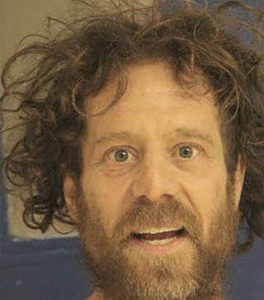
Authorities say a shooting rampage in California that left 5 people dead and injuring at least 10 others could have been much worse. The gunman, Kevin Janson Neal, 43, shot randomly at people and homes as he drove toward Rancho Tehama School in the town of Corning, 130 miles north of Sacramento. Teachers heard gunfire and ordered a lockdown shortly before the gunman rammed a fence with a pickup truck and entered the grounds with a semi-automatic rifle. He roamed the grounds for about 6 minutes and shot out windows but left, apparently frustrated, after he was unable to access classrooms. Police say he fired shots in at least seven locations before he was killed by police.
Police believe the motive was a bizarre revenge plot against his neighbors following a dispute in January. At a news conference, Tehama County, California, Assistant Sheriff Phil Johnston said Neal’s wife had been found dead in their home on Tuesday night. Authorities suspect she was fatally shot on Monday, after which Neal hid her body under the floor. Police had been at the home earlier that day in response to a domestic violence call.
The shooting spree began on Tuesday at about 8 a.m. in Neal’s neighborhood. Both neighbors who filed charges against him —a man and a woman—were killed at the start of Tuesday’s rampage. Police say after Neal shot his neighbors, he stole the unidentified male neighbor’s white pickup truck and drove it through town, doing several random drive-by shootings of residences in the community of about 1,500 people. Authorities say a 6-year-old boy was shot in the chest and foot at the school and is in stable condition. Other students were injured by glass from the windows but no students or teachers were killed because of the quick thinking staff at the school.
Rancho Tehama resident Salvador Tello, who was taking his three children to school, described seeing the gunman open fire, killing a woman. Tello said he saw bullets strike the truck in front of him and he put his children down to protect them and put his truck in reverse to get away. As he left, he saw a woman lying dead in the street and her wounded husband next to her. At one point, the shooter crashed the truck and carjacked a driver for his small sedan. The suspect then drove past a woman taking her children to school and fired gunshots ‘without provocation’ into their truck. The woman and her son were injured and both are recovering.
Neal was being prosecuted on charges of assault with a deadly weapon that occurred in January. Tehama County District Attorney Gregg Cohen said “Neal had a long-running dispute with his neighbors and during the January incident, he allegedly shot through a wooden fence at two female neighbors as they walked along the fence. Neal then jumped the fence, confronted the women, stabbed one and took a cellphone from the other.” Neal was also involved in an assault on a male neighbor in February.
Neal’s mother says she posted his $160,000 bail after the January assault charge. She said her son was a marijuana farmer and was in a dispute with neighbors he believed were cooking methamphetamine. She says when she spoke to him Monday and he said he felt like he was on a “cliff” and people were trying to “execute” him. She says he told her “Mom, it’s all over now. I have done everything I could do and I am fighting against everyone who lives in this area.” Neal’s sister described him as becoming extremely paranoid, spending hours on the phone with his mother who try to calm him down.
Read more

President Trump has declared the opioid crisis- which killed 64,000 Americans last year- a public health emergency. The order will last 90 days and can be renewed every 90 days until the President believes it is no longer needed. President Donald Trump said “Drug overdoses are now the leading cause of unintentional death in the United States by far. More people are dying from drug overdoses today than from gun homicides and motor vehicles combined.”
The administration will work with Congress to fund the Public Health Emergency fund and to increase federal funding in year-end budget deals currently being negotiated in Congress. Trump has directed agency and department heads to use all appropriate emergency authorities to reduce the number of deaths caused by the opioid crisis. The administration will also launch an ad campaign so that young people can see the devastation that drugs cause on people and their lives.
The administration’s opioid plan will allow expanded access to telemedicine services, giving doctors the ability to prescribe medications to treat addiction to those in remote locations. It also speeds the hiring process for medical professionals working on opioids and allows funds in programs for dislocated workers and people with HIV/AIDS to be used to treat their addictions. The designation gives the administration access to the Public Health Emergency Fund, but that fund is nearly empty.
In August, Trump said that he would declare the opioid epidemic a national emergency but later said the White House had determined that declaring a public health emergency was more appropriate than a national emergency. Many have criticized the decision to declare a public health emergency rather than a national emergency as not enough. A commission created by the administration and headed by Gov. Chris Christie called on the president to declare a national emergency under either the Public Health Service Act or the Stafford Act. Doing so, the commission said, could free up funds for treatment, ensure wider access to the anti-overdose drug naloxone and improve monitoring of opioid prescriptions to prevent abuse.
Congress is currently spending $500 million a year on addiction treatment programs, but that money runs out next year. The administration says it will work with Congress in the budgeting process to find new money to fund addiction treatment programs. A group of senators introduced a bill that would provide more than $45 billion for opioid abuse prevention, surveillance and treatment.
From 2000 to 2015, more than 500,000 people died of drug overdoses, and opioids account for the majority of those. Recently released numbers from the Centers for Disease Control and Prevention found that around 64,000 people died from drug overdoses in 2016. More than 140 Americans die every day from an opioid overdose, according to the Centers for Disease Control and Prevention. Roughly 80 percent of the world’s opioids are consumed in the US. A report published earlier this year found that 94 percent of heroin entering the United States came from Mexico. A large portion of the country’s fentanyl – a prescribed painkiller thought by many to be driving the opioid epidemic – derives from China and arrives in the States through US mail.
Read more

A combat pilot shortage has prompted the invoking of the National Emergencies Act as an executive order was signed that allows the Air Force to voluntarily recall up to 1,000 retired aviators for active duty. The order could help ease the combat pilot shortage in the force and improve military readiness as the administration steps up its new Afghanistan war strategy to defeat the Taliban and terrorists. The new strategy includes additional U.S. troops going to Afghanistan as well as increased U.S. air support for the Afghan military.
According to the Pentagon, the Air Force is currently short by about 1,500 pilots. Before the order was signed, the Air Force was allowed to rehire up to 25 retired officers under what’s known as the Voluntary Retired Return to Active Duty program and bring them back to active duty in critical aviation-related staff positions. The executive order now allows the Air Force to temporarily exceed the limit of 25 rehires. Other branches of the U.S. military also need more pilots, including the Navy, and the executive order could be used later to help address those challenges.
A release issued by the Air Force said they are now looking to have retired pilots return to the service for up to 12 months in positions that require qualified pilots. The service is looking for retired fliers of any pilot specialty code — which includes bomber, fighter, helicopter, tanker, and remotely operated aircraft pilots — to fill “critical-rated staff positions” and allow active-duty pilots to stay with units where they are needed to meet mission requirements.
The Air Force is combating the pilot shortage with various incentive programs to keep officers in uniform longer. A program launching later this year includes a 100 percent promotion opportunity and an aviator retention pay bonus worth up to $350,000 over a 10-year term that is already in effect. Pay for officers and enlisted personnel will increase for the first time since 1999. Incentive pay, also called flight pay, will increase for all officers, with those who have over 12 years of service potentially seeing the biggest boost, up to a maximum of $1,000 a month. Incentive pay will also increase for enlisted aircrew members — up to a maximum of $600 for those with over 14 years of service.
An Air Force official indicated they had no current plans to act on the authority granted to them by the president’s order. “The Air Force does not currently intend to recall retired pilots to address the pilot shortage,” “We appreciate the authorities and flexibility delegated to us.”
Read more
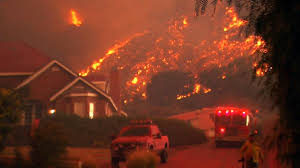
In California, the death toll from unprecedented wildfires has risen to at least 42, with over 400 more missing, as firefighters continue to battle 15 major blazes across the state. At least 100,000 people have been forced to evacuate, with about 75,000 people still displaced. Some area residents only had a brief window to escape as the fire quickly spread through neighborhoods with 20 mph winds and 40 mph wind gusts. Search teams are using drones with three-dimensional cameras and search dogs in an effort to locate missing people in neighborhoods that have been reduced entirely to ash and rubble. The death toll has risen daily as search teams gain access to previously unreachable areas.
The state’s insurance commissioner says the unprecedented wildfires have caused over $1 billion in insured losses. The wildfires have scorched more than 200,000 acres—roughly the size of New York City. The fires have destroyed over 8,000 homes and businesses and are now the deadliest in California since record keeping began.
The fires started Oct. 8 and 9 and steadily burning through forests, neighborhoods, farms, wineries and other infrastructure—including cell phone towers used by the state’s emergency services. High winds and dry weather statewide have hampered efforts to contain the multiple blazes-making them the most destructive wildfires in California’s history.
Firefighters have continuously fought to contain the series of fires using air tankers, helicopters and more than 1,000 fire engines. Hundreds of firefighters poured in to California as crews arrived from Nevada, Washington, Idaho, Montana, New Mexico, North Carolina, South Carolina, Oregon and Arizona. Other teams came from Canada and Australia. Crews were using 840 fire engines from across California and another 170 sent from around the country.
The fires have been particularly bad in Sonoma County, where 30 marijuana farms and three marijuana manufacturers have lost everything to the blazes. Cannabis cultivators cannot insure their businesses since federal law prohibits banks and financial institutions from participating in the marijuana industry, even in the eight states where recreational pot is legal, because marijuana is illegal according to federal law. Twenty-seven wineries have reportedly suffered damaged. Many wineries have reported either complete losses or significant damage.
California governor Jerry Brown has remained in state capital Sacramento this week, issuing emergency declarations and securing federal disaster relief. “This is truly one of the greatest tragedies that California has ever faced,” Brown said. “The devastation is just unbelievable. It is a horror that no one could have imagined.”
Read more

On October 1st 2017, the deadliest mass shooting in the US occurred at the Route 91 Harvest Festival in Las Vegas, killing 58 people and injuring 527. The shooter, identified as 64 year-old Stephen Paddock, broke two windows in his suite on the 32nd floor of the Mandalay Bay hotel and sent more than 22,000 country music fans scrambling for their lives. Between 10:05 and 10:15 pm, Paddock fired thousands of rounds at concert goers, turning the last day of the festival into a massacre. The headlining performer, country music singer Jason Aldean was giving the closing performance when the first shots were fired.
Several videos of the attack show the terror as countless rounds of gunfire can be heard with intervals of just a few seconds in between. Many concert-goers and performers still in the area initially thought the sounds were fireworks. When the second round of gunfire is heard, Jason Aldean ran off the stage and fans realized it was automatic gunfire-but for many, it was already too late. As terrified fans got down, many noticed people nearby who had already been shot. Videos of the attack show fans running, and then dropping to the ground as another round of gunfire starts. As people ran for their lives, many were separated and left not knowing if their friend or loved ones made it out. The day after the attack, stories circulated of the many brave people helping people to safety, tending to those injured and loading wounded into their vehicles to get them to area hospitals. Slowly, the identities of those lost were confirmed either through family confirming on social media or reaching out to news outlets.
Six minutes prior to the shooting, Mandalay Bay hotel security guard Jesus Campos was checking an alert for an open door in another guest’s room near Paddock’s room. Paddock, who had placed security cameras outside his room, shot Campos through the door of his suite, which was outfitted with a camera to survey the hallway, as was a room service cart parked outside. Police said Paddock fired 200 rounds into the hallway, hitting Campos once in the leg. Campos radioed the Las Vegas Metropolitan Police Department that the gunman was in room 32135 and began evacuating people from the 32nd floor, including a maintenance worker who entered the hallway moments after he was shot.
The first 911 call was at 10:08 pm but police officers were initially confused as to where the shooting was coming from. Officers eventually spotted multiple flashes of gunfire on the northern side of Mandalay Bay and responded to the hotel. At 10:12 pm, two officers on the 31st floor reported the sounds of gunfire on the floor above them. Between 10:26 and 10:30pm, eight officers reached the floor but didn’t hear anymore gunfire. They systematically searched and cleared rooms, evacuating any remaining guests using a master key provided by Campos. At 10:55pm officers reported all guests had been evacuated and at 11:20pm, police breached Paddock’s room with explosives. Paddock was found dead, having shot himself in the head before the police entered.
Police found 22 rifles and one handgun inside Paddock’s hotel room that he had occupied since September 28. Police believe Paddock’s surveillance cameras and additional evidence found in the room suggest that Paddock intended to escape after the shooting. Police, relatives, and neighbors described him as a wealthy, high-stakes gambler who kept to himself -with no political or religious affiliations. They say he frequently gambled tens of thousands of dollars-earning him valuable comps from Vegas area casinos. Paddock had no criminal record or known history of mental illness. Police believed he acted alone but have not determined his motive.
Read more